
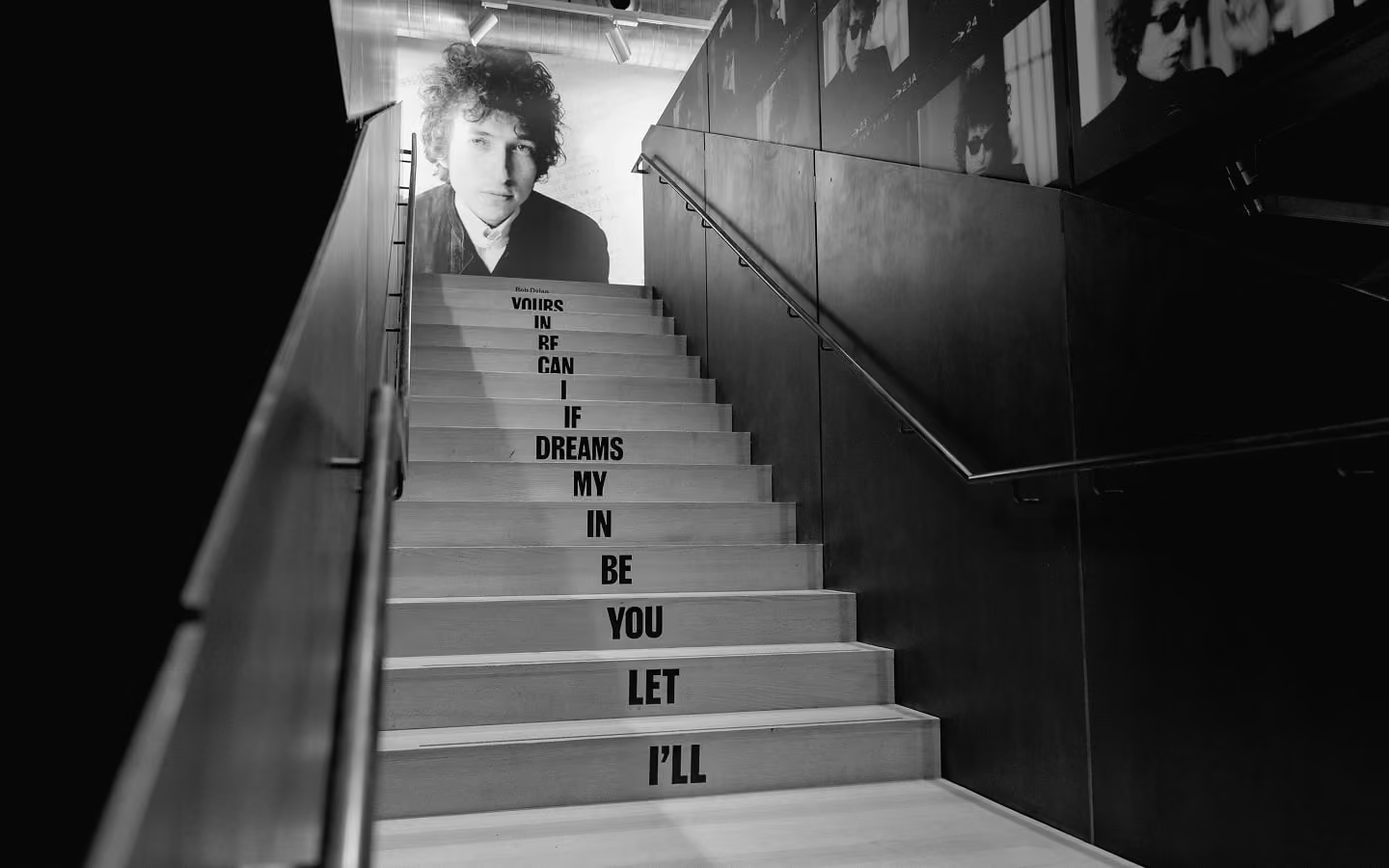
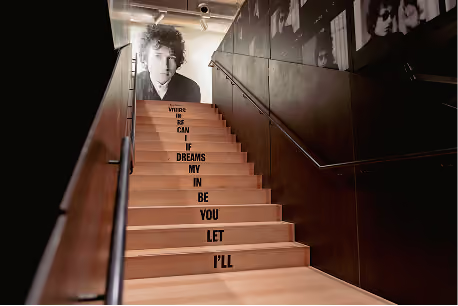
The Bob Dylan Center inspires and celebrates fearless creativity, using the music and artistry of one of the most important artists of our time – any time – as a catalyst for personal expression and cultural change.
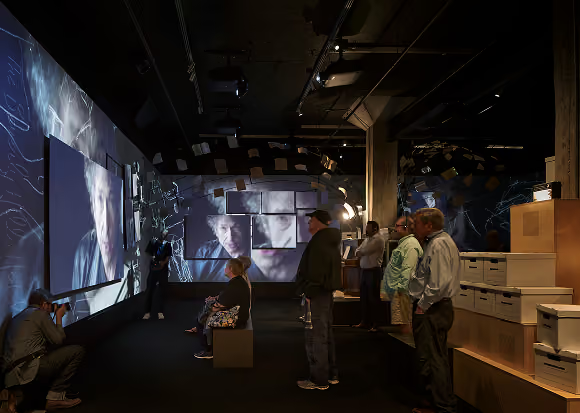
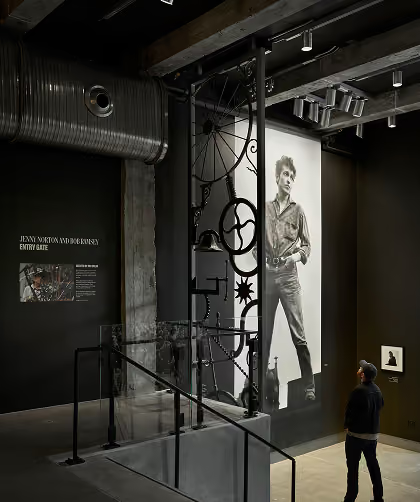
Located in Tulsa's vibrant Arts District, the center offers visitors unprecedented access to Dylan's creative life through permanent and rotating exhibitions, live performances and a robust schedule of public programs. It's a space designed not just to document a legacy but also to spark conversations about the creative process and encourage all visitors to tap into their own creativity.
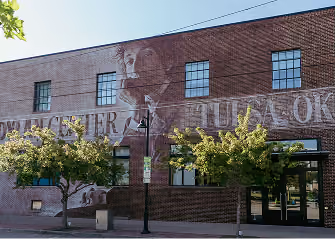
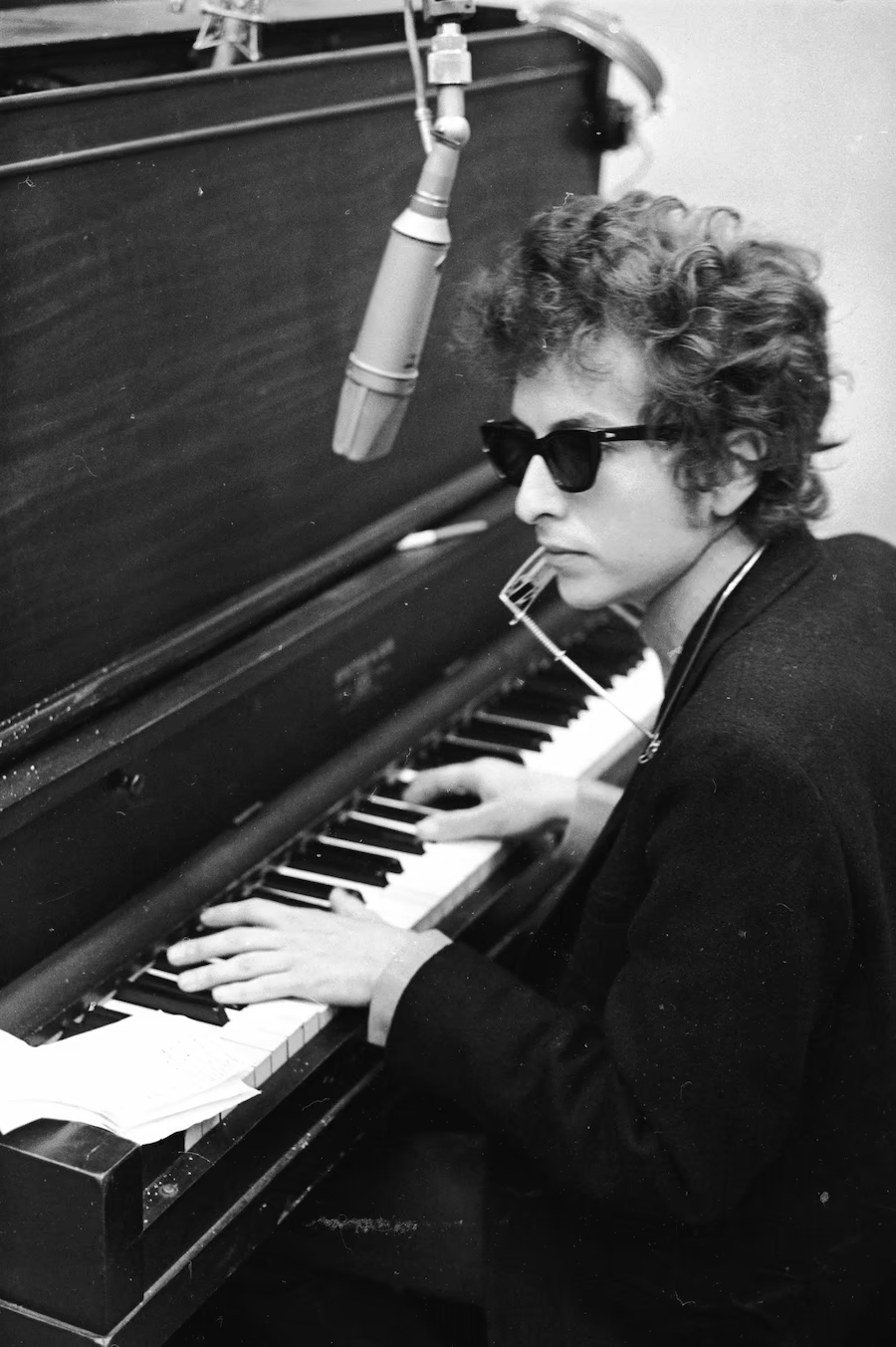
The 29,000-square-foot building was designed by acclaimed architectural and exhibit design firm Olson Kundig, with exhibition design and media development by 59 Productions, world-leading specialists in design for stage and live events, and interactive audio components designed by Art Processors. The center's three-story façade faces Guthrie Green, Tulsa's beloved public park, and is adorned with a mural of Dylan by spray-paint artist Erik Burke, based on Jerry Schatzberg's iconic portrait "Edenic Innocence."
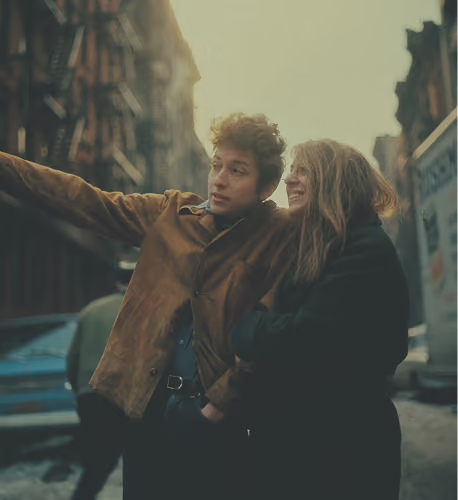
Bob Dylan is one of the most unclassifiable and influential artists in the history of American music. In the decades since he first burst into public consciousness via New York City’s Greenwich Village folk music scene in the early 1960s, Dylan has sold more than 125 million records around the world and amassed a singular body of work that includes some of the era’s greatest and most popular songs. For the past seven decades, Dylan has rewritten the rules of what a song can be and what a songwriter can say.
Born in Duluth, Minnesota, on May 24, 1941, most of Dylan’s childhood was spent in the iron-mining town of Hibbing. Dylan taught himself piano and guitar and played in several bands, attending the University of Minnesota for one year in 1959. He moved to New York in 1961 — heavily influenced by Woody Guthrie and other American folk artists — and began to play at various clubs in the burgeoning folk music scene of Greenwich Village. Signed to Columbia Records by renowned A&R executive John Hammond in 1961, he released his self-titled debut album in 1962.
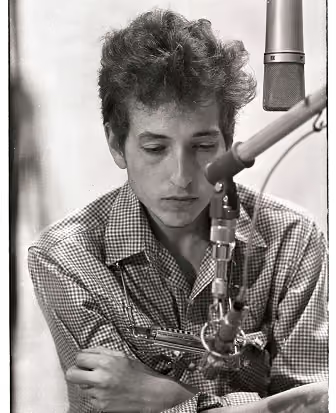
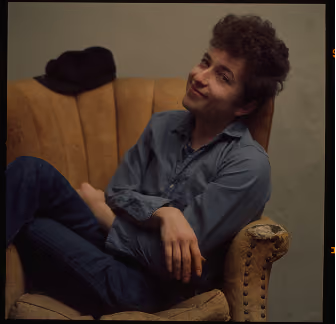
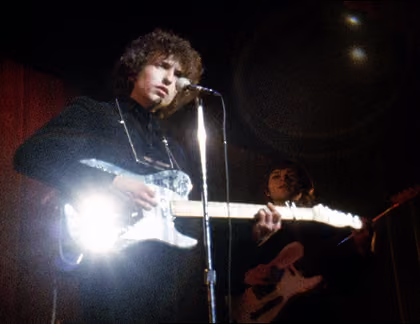
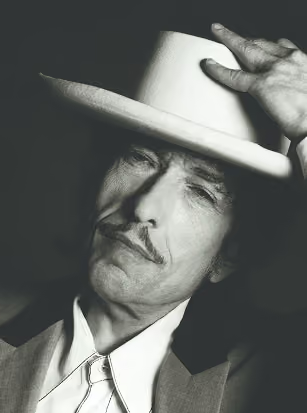
Many of Dylan’s early songs were made famous by other artists, such as Joan Baez and Peter, Paul & Mary, whose versions of his classic compositions “Blowin’ In The Wind” and “The Times They Are A Changin’” helped bring the young artist to a larger audience. From his earliest performances in Greenwich Village coffee houses, folk festivals and rallies in the early 1960s to his arena rock concerts of the 1970s and subsequent annual international tours, Dylan established an enduring reputation as one of the world’s great live performers.
Dylan has released more than 50 albums and has written more than 600 songs, including “Like A Rolling Stone,” “All Along The Watchtower,” “Knockin’ On Heaven’s Door” and “Make You Feel My Love.” His songs have been covered more than 6,000 times by artists as diverse as Duke Ellington, Jimi Hendrix, Guns N’ Roses, Stevie Wonder, Rod Stewart, the Staple Singers, the Red Hot Chili Peppers, Bob Marley, Pearl Jam, Neil Young, Adele and U2.
Dylan’s contributions to worldwide culture have been recognized and honored numerous times. He received an honorary doctorate of music from Princeton University, New Jersey, in 1970 and another from the University of St. Andrews, Scotland, in 2004. President Clinton presented him with a Kennedy Center Honor at the White House in 1997, recognizing the excellence of his contribution to American culture.
Dylan's influence on literature, culture and music has been recognized at the highest levels, across institutions and across decades.
Awarded by the Swedish Academy "for having created new poetic expressions within the great American song tradition"
Presented by President Barack Obama
Presented by President Bill Clinton
Including six entries in the Grammy Hall of Fame
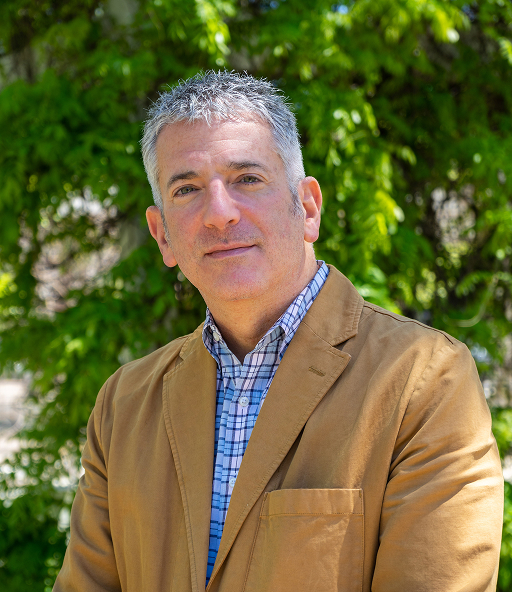
The American Song Archives Advisory Board supports the mission and operations of American Song Archives. Dedicated to preserving the legacy of America’s most enduring and inspiring songwriters, American Song Archives houses the largest collection of Woody Guthrie and Bob Dylan primary resource materials in the world and houses other collections, including the Phil Ochs and Tom Paxton archives. American Song Archives operates the Woody Guthrie Center and Bob Dylan Center.
Learning of the Woody Guthrie Center, which opened in 2013, Bob Dylan decided that he wanted the permanent home for his archives to be under the same roof as the collection of his formative and enduring influence. In 2016, Dylan and his team met with representatives of the George Kaiser Family Foundation, a philanthropic and cultural force in Tulsa, to make arrangements for the acquisition of Dylan's archive, and the Bob Dylan Center opened in 2022. In addition, as he explained to historian Douglas Brinkley in an interview in Vanity Fair:
“When news broke in 2016 that Bob Dylan had given his vast archive of recordings and artifacts to the George Kaiser Family Foundation of Tulsa, people were taken aback. Why was this cultural trove going there, of all places?
Now we know the answer. That initial cache of Dylanalia has become the cornerstone of an entire museum: the Bob Dylan Center. Recently I asked the singer-songwriter, who is 80, why he’d chosen Tulsa. ‘There’s more vibrations on the coasts, for sure,’ he explained. ‘But I’m from Minnesota and I like the casual hum of the heartland.’”
If you are having difficulties reserving your visit online, please email info@bobdylancenter.com. You may also visit the center in person to purchase a ticket, however please note tickets are for a reserved entry time and may not be available for the time you arrive at the center.
All tickets purchased in advance are non-refundable but can be exchanged.
Ticket changes must be made within 24 hours of ticket time. Failure to redeem or exchange within 24 hours will be considered a donation to the center.
For questions regarding tickets, please email tickets@bobdylancenter.com
Prior to booking tickets, members will need to log in: https://secure.americansongarchives.org/account/login
If you have never logged in, but are a member, you will need to click “Reset Password” and follow the prompts. You must use the email you used to sign up for your membership, otherwise it will make a separate account and will not have your membership linked to the account.
If you have already created a member account, you do not need to create a new account. Please use your already existing account, as it will be tied to your membership. If you’ve forgotten the password, you may reset it to gain access to your already existing account.
Our system requires all transactions create an account, we apologize for any inconvenience this may cause.
Timed admission provides two (2) hours for your visit, which allows time to experience the full center and our self-guided audio tour. If you should desire more time for your visit, please check with our front desk upon entry; we will do our best to accommodate.
The archive consists of more than 100,000 items, including essays, poems, liner notes, correspondence, philosophical musings, never-before-seen photos and more, spanning nearly the entire length of Bob Dylan’s career.
At this time, we accept research requests to the Bob Dylan Archive® via research@americansongarchives.org. All research requests go through a vetting process. Due to the high volume of requests, we are unable to accommodate unscheduled researchers.
Metered parking in the district is enforced Monday-Friday, 8 a.m.–5 p.m.
For the most up-to-date information regarding parking in the district, click here.
Personal wheelchairs and mobility devices are welcome.
The center and restrooms are wheelchair-accessible.
Service animals are permitted into the Bob Dylan Center. We do not allow pets or therapy animals.
Latest Press
We welcome inquiries from members of the press who would like to know more about the Bob Dylan Center and its mission and activities.
Make a Donation
The Bob Dylan Center is more than a destination. It's a mission. Your support helps preserve the Bob Dylan Archive, fund school outreach programs, support guest artists, and create fellowship and internship opportunities for the next generation of creators.
.webp)